Seconds beside the cutting table
The pile at the end of the table mixes weaving faults, cutting mistakes, and pieces nobody wrote a slip for. A month-end argument needs those split apart.
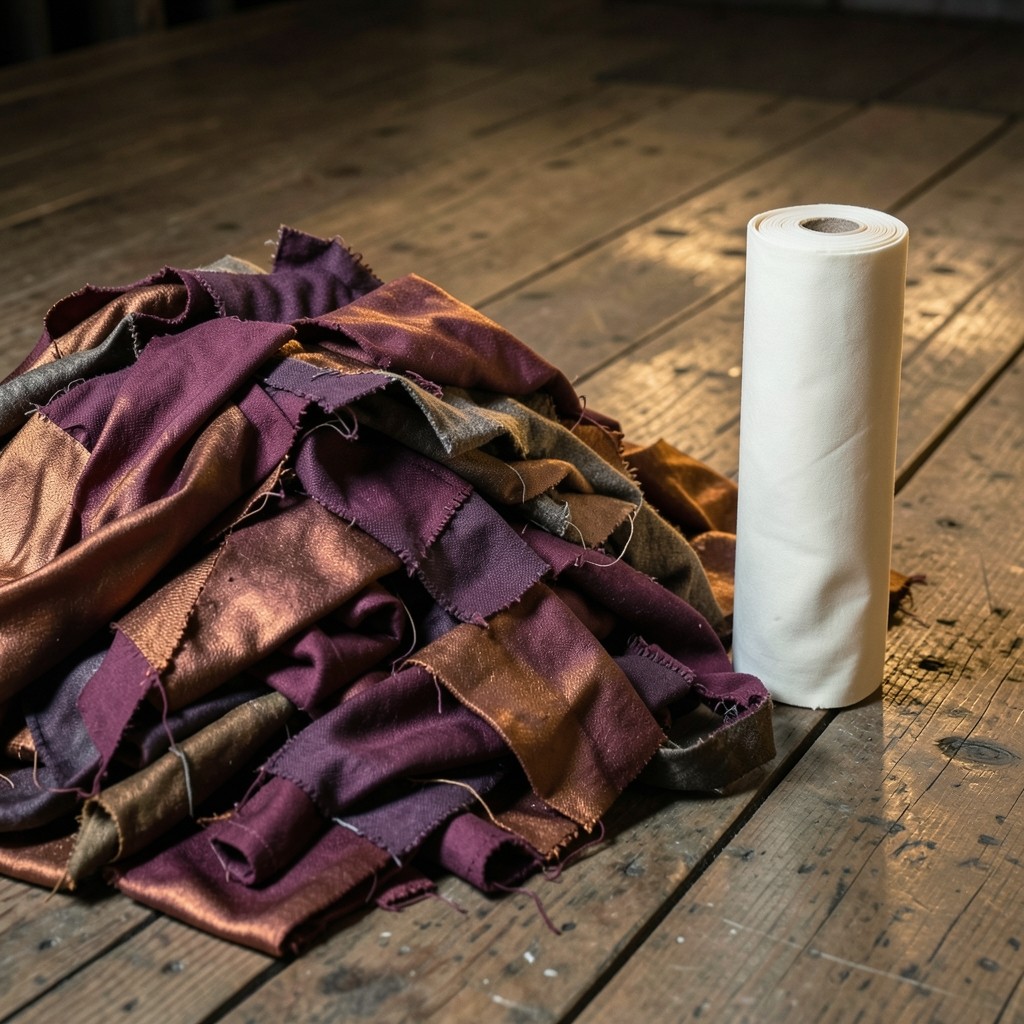
Walk into a cutting room at the end of a month and the seconds are already a landscape: a low pile of greige faults, a brighter pile of dyed pieces with a streak, and a basket of strips too short to call a remnant and too long to sweep away. The slips, if they were written, are on a spike by the door.
Weaving faults and cutting losses do not belong in one total if the point of the chart is to decide who walks the hall tomorrow. A float in the cloth was born on the loom. A short panel was born at the table when the lay was wrong. An unmarked piece is a third category. Folding it into whichever pile is angrier that week makes the next month’s book useless.
On a recent chart for a room in Min Buri we found eleven slips without cloth and a stack of streaked pieces with no slip at all. The lead knew the streaked pieces; they had come from one dye lot and had been pulled off the table in a hurry. The chart kept them as unmatched dyed seconds. She did not want them called cutting losses, and the weaving supervisor did not want them called loom faults until the dye house had looked.
Remnants that will be sold by the kilo should be weighed, not guessed from the slips. We do not bring a scale. If the room has one, we use the figure they write down while we watch. If they do not, the chart says the remnants were not weighed.
The sheet we leave is meant to be read standing up. Fine columns that only make sense at a desk tend to migrate back into a folder, and then the pile grows again without a picture.