Mill ledger
The page stays a page until someone reads it aloud
A loom-shift commission is a ledger exercise: the book, the slips, the clerk, then ink. This is the sequence we follow when a weaving hall asks us to draw a fortnight.
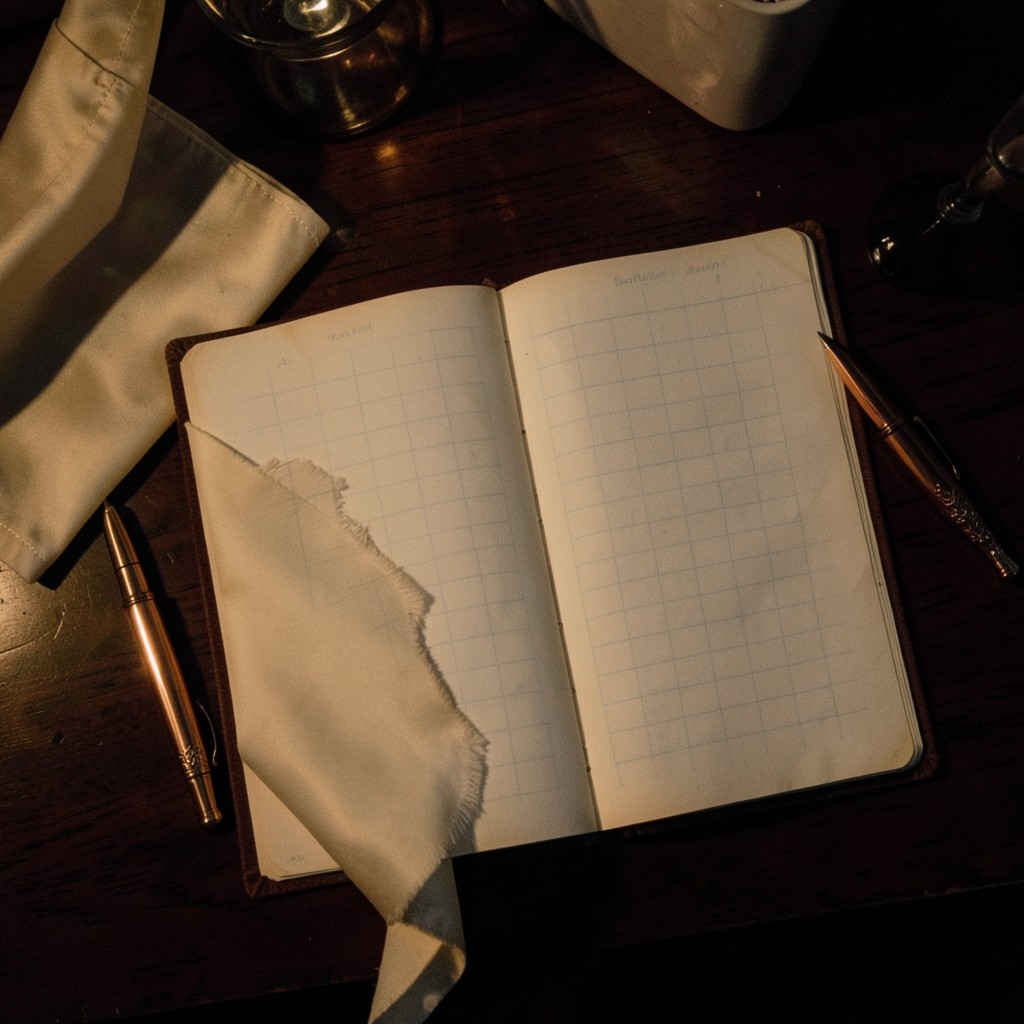
- 01 BookThe clerk keeps the shift book in the hall. We do not start from a photograph of a page if the book itself can be opened.
- 02 SlipsCloth-meter slips on the beams are checked against the column. Disagreements are written down, not averaged.
- 03 VoiceThe person who wrote the shorthand reads the ticks. A heavier pencil, a private “W”, a canteen signature — those habits live in speech.
- 04 PencilAt Khlong Sam Wa the first sheet is the whole hall. Later sheets are only the looms that need a closer look.
- 05 InkThe supervisor reviews pencil before ink. Then the set is left in the mill office.
What the ledger refuses
Lost slips stay lost. A loom with no line is a gap on the sheet, not a zero we felt like writing. If the hall wants those nights included, someone has to find the paper. We will wait a few days for that search inside the same commission; after that the gap is part of the chart.
The same discipline applies when a dye house or a cutting room asks for their own ledger. Shade cards are seen under the dye-house lamp. Remnant piles are seen while they are still on the floor. The mill ledger is the habit; the room changes.