What a night book is actually counting
Cloth meters, stops, and a signature are not the same kind of fact. A night book in a Bangkok weaving shed usually mixes all three in one column.
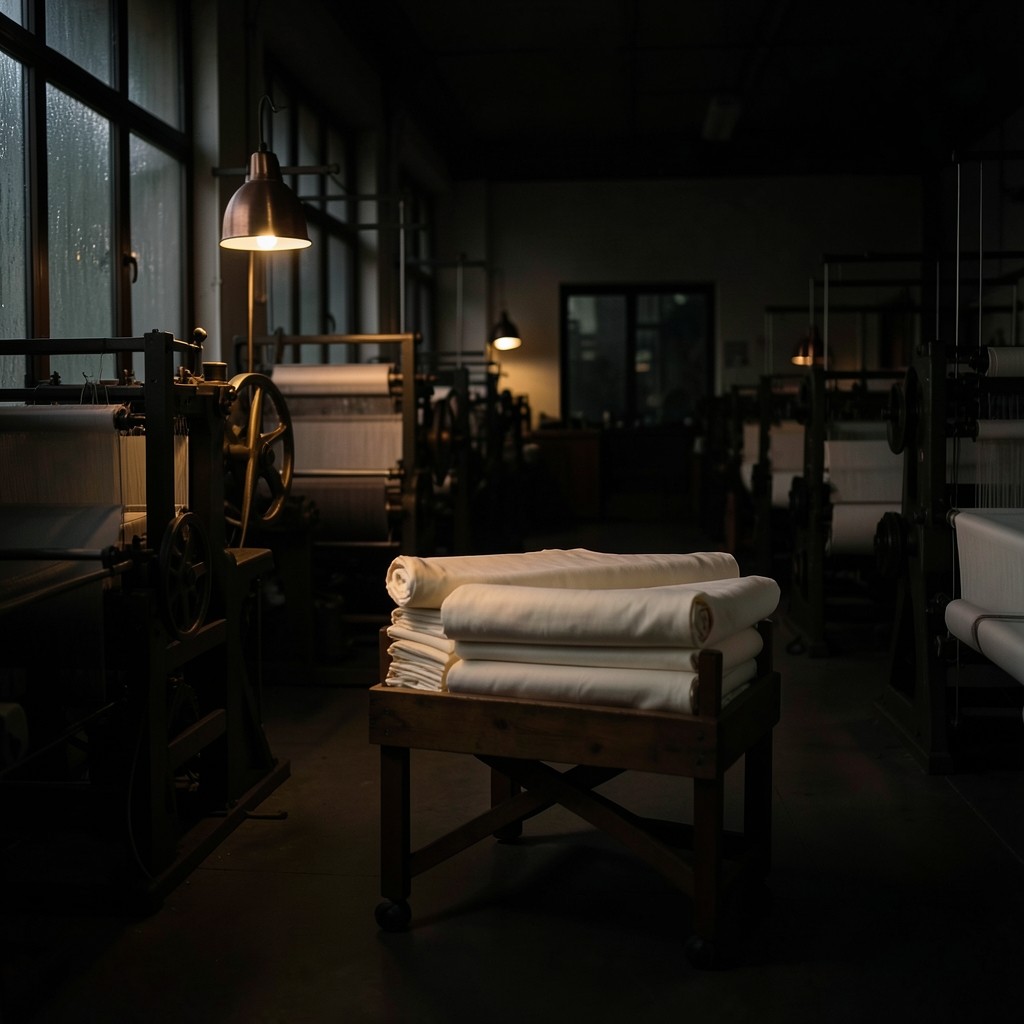
In most of the sheds we visit east of Bangkok, the night book is an ordinary exercise book. The clerk rules a fresh page at the start of the shift, writes the loom numbers down the left side, and leaves a column for cloth meters. By morning the column holds numbers, ticks, and sometimes a word that only one person on that shift still understands.
The number that matters to the buyer is meters of cloth. The number that matters to the fitter is how many times a loom stopped. Those two facts often share a cell. A clerk who is also watching the door will write the meters and add a tick for a stop, then forget which tick was a warp and which was a mechanical halt. When we draw a loom-shift chart we will not split that tick unless someone who was on the floor can say which it was.
Signatures are a third thing. Some sheds ask each weaver to sign the meter line. A missing signature does not mean the loom stood idle. It often means the weaver had already walked to the canteen and the clerk filled the meters from the counter. We mark those lines as clerk-entered. The supervisor usually knows which they are; the chart should not pretend the weaver confirmed them.
Humidity shows up in the book as well. In the weeks before Songkran the paper cockles and the pencil smears. A smeared digit is not a small problem when 6 and 8 both look likely and the difference is a bolt. We read those digits with the clerk under the hall lamp, and if the clerk will not choose, the chart carries a gap.
A useful night book, for our purposes, is one that stays in the hall. Books that go home in a supervisor’s bag tend to gain neat numbers that the slips on the beam do not support. We ask for the slips as well as the book. Where they disagree, the chart shows both and the hand-over is the moment to decide which one the office will trust.