Dye-house visit and a bound shade ledger
Dye-lot ledger
Shade arguments usually start under a different lamp from the one the dyer used. The dye-lot ledger puts the card, the vat note, and the hour of the batch on one spread so the comparison is not a memory of the colour.
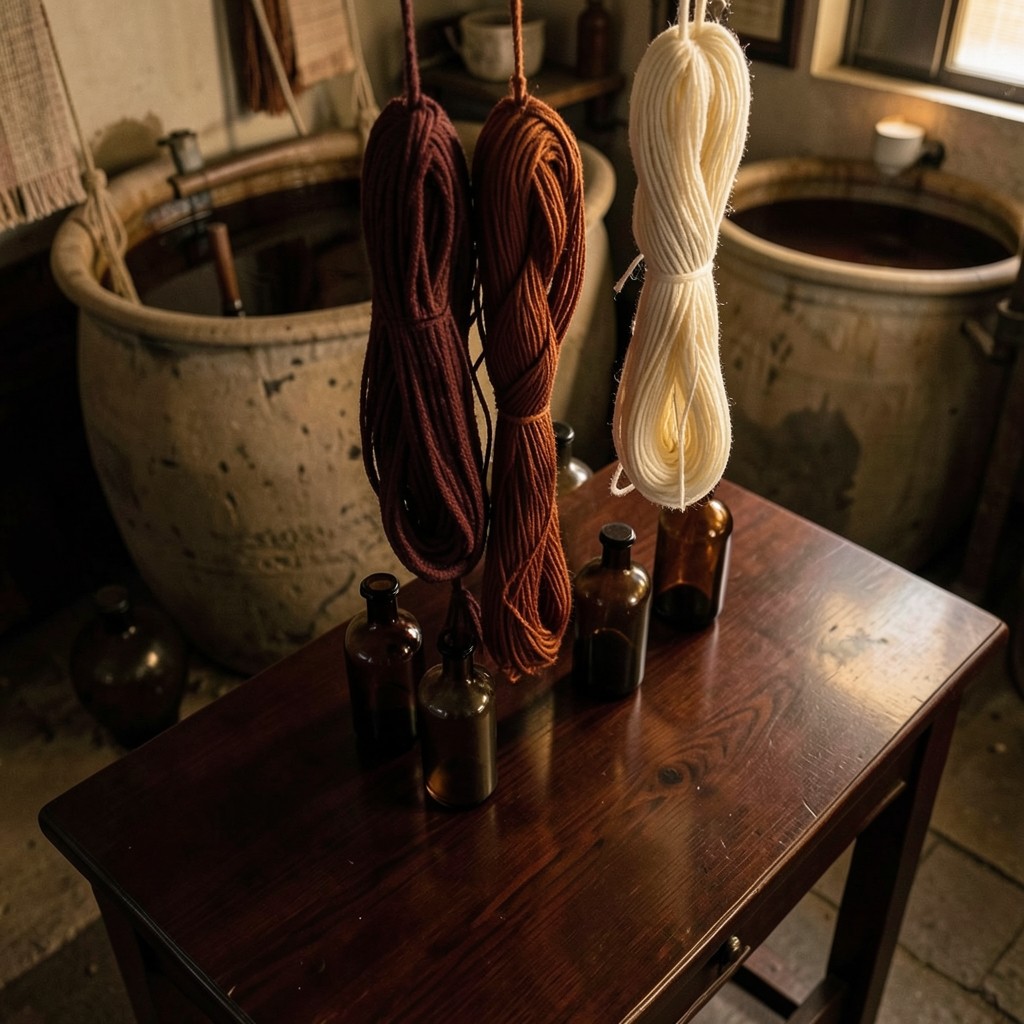
Who it is for
Dye-house leads and mill owners who keep shade cards and handwritten vat notes, and who need a buyer or a weaving hall to see why a lot was held back.
What you receive
A bound ledger for the batches you name: each spread holds the shade relationship, the vat note summary in plain words, and whether the lot was passed, held, or redyed.
Inside the commission
- A visit to the dye house to see the cards under the lamp you actually use
- Reading of vat notes for up to twelve batches
- A bound ledger drawn at the studio
- One review with the dye-house lead before binding
Outside the commission
- Redyeing, chemical orders, and lab dips
- Matching a new season’s palette
- Batches whose cards were thrown away
How the work proceeds
- Cards on the tableWe ask you to pull the shade cards and vat notes for the batches in question before we arrive.
- Lamp checkWe look at the cards in the dye house, not in our studio, because the lamp changes the argument.
- LedgerEach batch gets a spread. Held lots are marked as held; we do not quietly promote them to passed.
What to have ready
Set aside the physical shade cards. A photograph of a card is a last resort and we will say so in the ledger.
Twelve batches is the starting scope. More batches are quoted before the visit. We do not assign a pass to a lot the dye house has already rejected.
Next step
Write with the number of batches and whether the cards are still in the dye house.